


 Italiano
architecture trends in 2025
Written by Elisa Pardini
Architecture trends in 2025 have marked a decisive shift. Regenerative thinking, biophilic principles, material honesty and human-centred design have moved from the margins into the centre of contemporary practice. I have felt this change not as a sudden revolution, but as a gradual deepening of values that have always mattered to me: care, context and the quiet power of well-crafted spaces.
For us at Pardini Hall Architecture, this year has been about clarity. Clarity in how we work, in the materials we choose, and in the experiences we want our buildings and interiors to create. It has also been the year that we opened up more of our internal conversations to the outside world, through our new weekly editorial series, Lines of Thought.
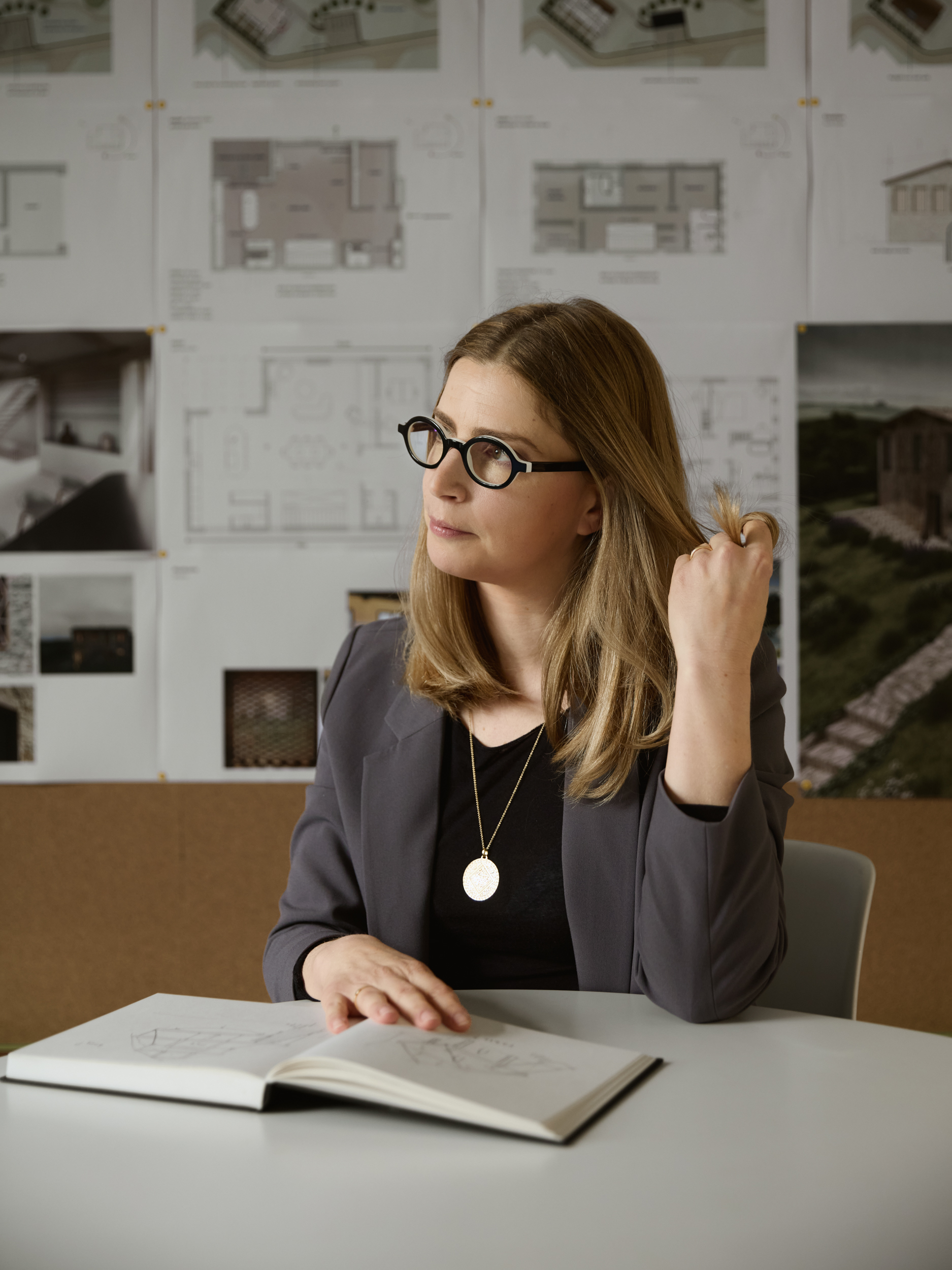
Lines of Thought – a new space for reflection
Lines of Thought is our space for reflection, exploration and dialogue at Pardini Hall Architecture.
For me, every space carries a narrative shaped by memory, movement and emotion. From a Tuscan hillside to a London street, or a courtyard pool immersed in its landscape, our work seeks to weave beauty with sustainability and craft with story.
This journal opens a window onto that process. It traces the lines between design insight and material choice, hospitality and innovation, timeless traditions and future facing ideas. It has become a place to pause, to consider what it means to create architecture that is grounded in context yet attuned to possibility.
Over the course of 2025, our Lines of Thought journal entries have followed a loose but meaningful thread. We explored sensory architecture and what it means to design for more than the eye. We looked at natural materials and how stone, timber, clay and lime can shape healthier, more enduring spaces. We reflected on retrofitting architecture as a way to rethink sustainability through adaptive reuse and low carbon renovations. Each article has been both research and confession, a way of articulating the instincts that guide our studio work every day.
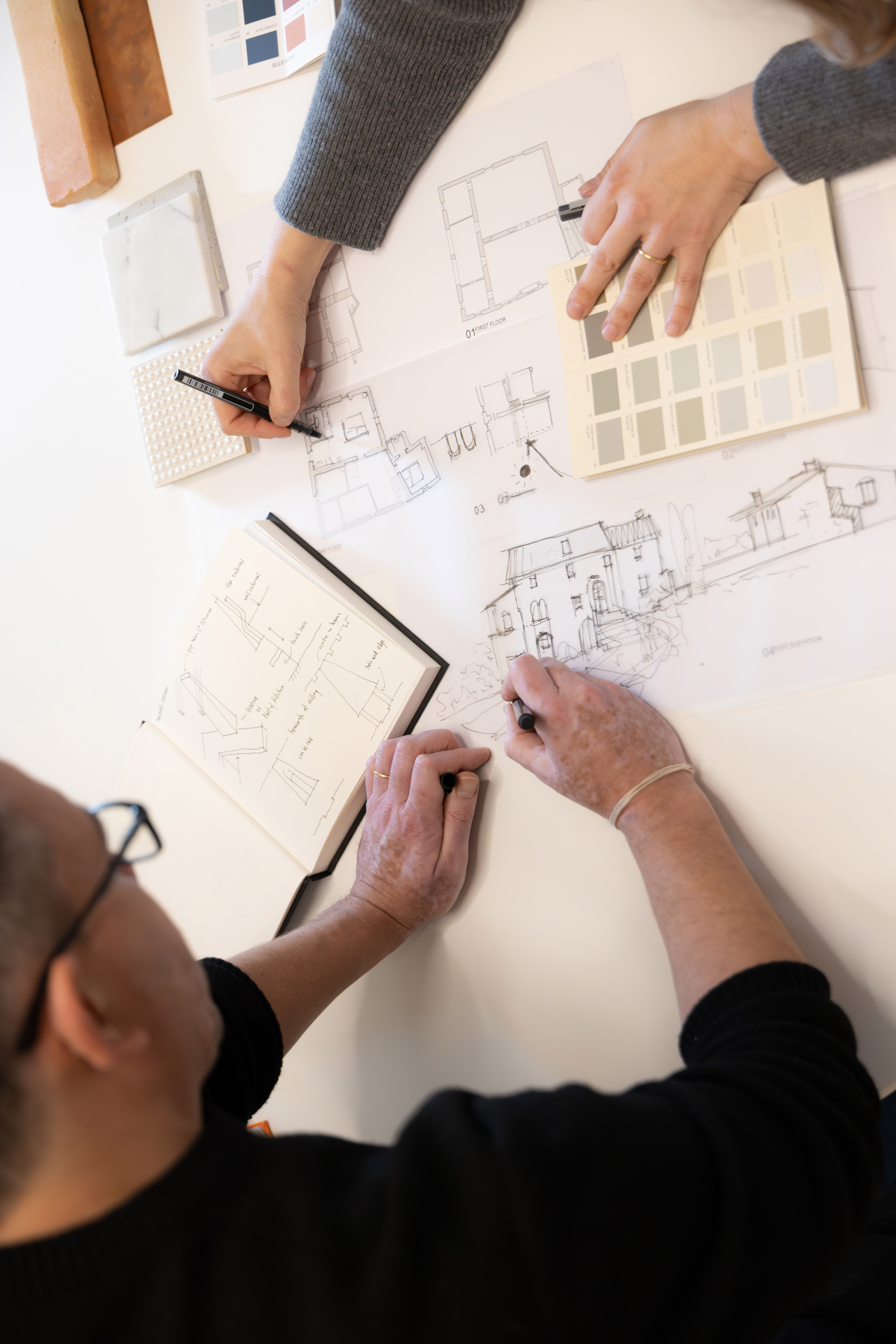
a year framed by responsibility and recognition
This was also a year in which I had the privilege of spending time on the other side of the table as a jury member for the Archello Awards. Seeing so many projects from different cultures and climates was humbling. I noticed a rising maturity in sustainable architecture, where regenerative design and energy efficient thinking are no longer treated as separate features, but as the starting point of the brief.
Taking part in the FRAME competition offered a different perspective. Instead of observing from the outside, we were inside the conversation, presenting our work alongside studios whose interiors feel sculptural, innovative and yet deeply grounded in everyday life. Both experiences reinforced something important for me. The most compelling projects were not always the loudest. They were the ones that understood context, that embraced restraint, and that allowed people and landscape to remain at the centre of the narrative. This mirrors how I want our own work to feel: atmospheric rather than showy, calm rather than spectacular for its own sake.
The awards and recognition the studio received in 2025 were a quiet affirmation of these values. They remind me that clarity, rigour and human experience still matter deeply in an industry that can sometimes chase novelty for its own sake.

within the studio
Internally, 2025 has been a year of definition. We refined our processes and communication, strengthened our network of artisans and suppliers, and clarified how we want projects to feel from the first conversation to the final handover.
I have been reminded again that architecture is a collective act. Our work is held up by clients who bring trust and curiosity, by collaborators who share our values, and by craftspeople who give material form to drawings and models. The more intentional these relationships become, the more coherent the work feels.
looking ahead to 2026
As I look toward 2026, several currents are already visible.
There is growing interest in AI in architecture and interiors. I do not see this as a replacement for intuition or experience, but as a tool to extend them. AI has the potential to support material research, optimise environmental performance, simulate daylight and airflow, and help us test multiple scenarios more rapidly. It can become a powerful partner in regenerative design, particularly in understanding complex data about climate, energy and lifecycle impact.
material honesty, sensory intelligence, sustainable practice
If I look back across the studio’s work this year, three themes surface again and again. The first is material honesty. Natural, breathable finishes, reclaimed elements, tactile surfaces and thoughtful detailing have shaped many of our design decisions. I have become even more convinced that materials which age, patinate and quietly record time are essential to architecture that feels grounded and real.
The second is sensory intelligence. We have continued to explore how light, acoustics, thermal comfort, scent and texture work together to support wellbeing. Residential architecture in 2025 has clearly shifted toward homes that feel restorative and resilient. Clients speak more often about calm, quiet, softness and mental space. This has encouraged us to refine the way we choreograph light, control reverberation and use tactile materials to create atmospheres that are both simple and rich.
The third is sustainable architecture in practice rather than in rhetoric. We have paid close attention to embodied carbon, building envelopes, passive strategies and the lifecycle of materials. Where possible, we have favoured low carbon renovations and retrofits over unnecessary demolition. To me, sustainability is not a separate layer to be added. It is the structure, the detail, the daily habit of choosing a better option.
Material innovation will likely deepen, with more bio-based materials, recycled aggregates and circular strategies entering mainstream practice. I also see a continued shift toward sensory and emotional architecture, where wellbeing, atmospheres and the quality of daily rituals are treated as core performance metrics rather than soft extras.
Lines of Thought will keep evolving as a place to explore these topics. In 2026, we will share more writing on AI and design, on circularity and craft, on the role of hospitality in residential spaces, and on how architecture can give back to the land and communities that host it.
reflection: closing the year
As I close this reflection on 2025, I am filled with gratitude. For our clients, who invite us into their homes and futures. For our collaborators, who bring their intelligence and sincerity to every project. For the makers and artisans who shape materials with patience and skill. And for everyone who has read, shared or responded to Lines of Thought this year.
Thank you for walking alongside us.
We enter 2026 with the same conviction that has guided this year: to create architecture that listens, that restores, and that feels alive in all the senses.
An Italian eye, a London practice. We design here and build with people on the ground.