


 Italiano
rethinking craftsmanship in the digital age
Craft has always been central to architecture. It lives in the understanding of materials, the precision of detailing, and the quiet decisions that shape how a space feels over time.
As AI architecture tools become more present in design practice, questions naturally arise around authorship, skill, and the role of the human hand. At Pardini Hall Architecture, we see this moment not as a departure from craft, but as an evolution of it.
Technology does not replace craftsmanship. It reframes how knowledge is gathered, tested, and applied. The essence of making remains human.

craft as knowledge, not nostalgia
Architectural craftsmanship has never been static. It has always absorbed new tools, from hand drawing to CAD, from physical models to digital fabrication.
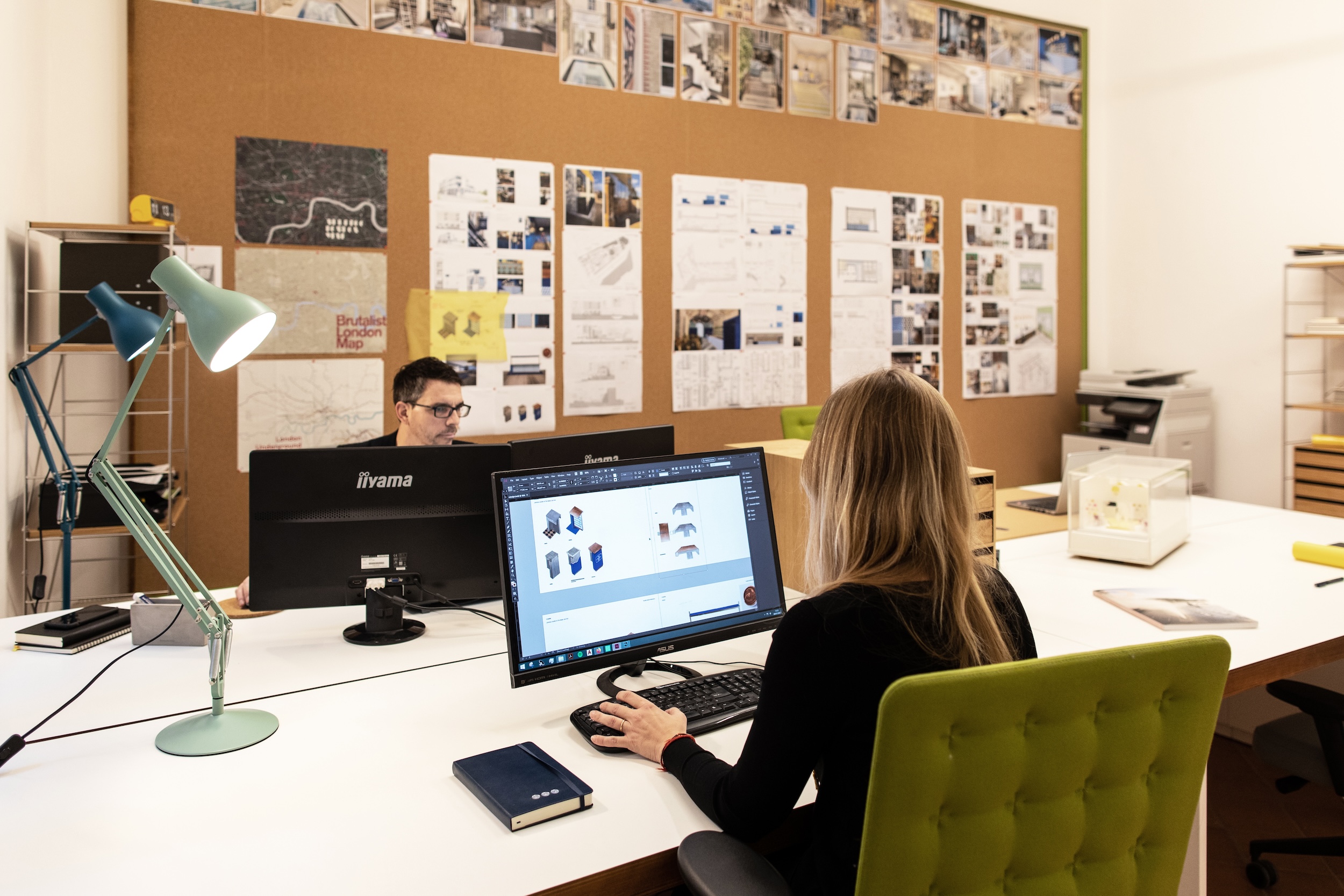
Today, technology in architecture allows designers to understand materials and performance with greater depth. AI can analyse tolerances, simulate junctions, and predict how components behave over time. These insights do not remove craft. They inform it.
Digital craftsmanship lies in how this information is interpreted. The architect still decides where to refine, where to soften, and where imperfection is meaningful rather than corrected.

precision as a form of care
AI interior design tools can support an extraordinary level of precision. Material thicknesses, joinery alignments, and tolerances can be tested before construction begins. This reduces waste, improves longevity, and supports more responsible building practices.
Precision, however, is not the same as uniformity. Craft exists in judgement. Knowing when to refine and when to leave room for variation is part of architectural intelligence.
At its best, AI architecture enhances attention. It allows designers to focus more closely on proportion, tactility, and the sensory experience of space.

craft, innovation, and the future of design
The future of design will not belong solely to machines or to tradition. It will belong to practices that understand how to combine both.
AI architecture offers new ways to test, predict, and refine. Craft ensures that spaces remain human, contextual, and emotionally resonant.
At PHA, we see technology as a support for making better decisions, not faster ones. The goal is not perfection, but clarity.
the evolving role of the architect
As digital tools become more capable, the architect’s role continues to shift. Less time is spent on repetition. More time is given to evaluation, intention, and dialogue with makers.
AI supports exploration, but the architect remains the editor. Decisions are filtered through experience, cultural understanding, and memory of how spaces are lived in.
This balance is essential. Without it, technology risks flattening design into efficiency alone. With it, architectural innovation becomes richer and more grounded.
reflection
Adaptive interiors are ultimately about empathy. They listen to how people live, how routines shift, and how spaces are experienced over time.
Projects like 4MS demonstrate that flexibility does not require complexity. With careful design, existing homes can be transformed into places that support modern living while remaining grounded, efficient, and quietly expressive.
Lines of Thought continues to explore how architecture and interiors can respond thoughtfully to change, creating spaces that feel alive, resilient, and deeply human.