


 Italiano
rethinking interiors for changing lives
Domestic life no longer follows a fixed pattern. Homes must now accommodate work and rest, solitude and gathering, storage and openness, often within the same footprint. Adaptive interiors respond to this shift, designing spaces that evolve with their occupants rather than prescribing how they should live.
At Pardini Hall Architecture, adaptability is not about novelty or visual effect. It is about making interiors work harder, more intelligently, and more quietly. Flexibility is achieved through proportion, light, and careful spatial sequencing, ensuring that spaces feel generous, calm, and intuitive.
The 4MS project in Chelsea offered an opportunity to explore these ideas in depth, reimagining an existing home to support contemporary living without excess.
opening space, inviting light
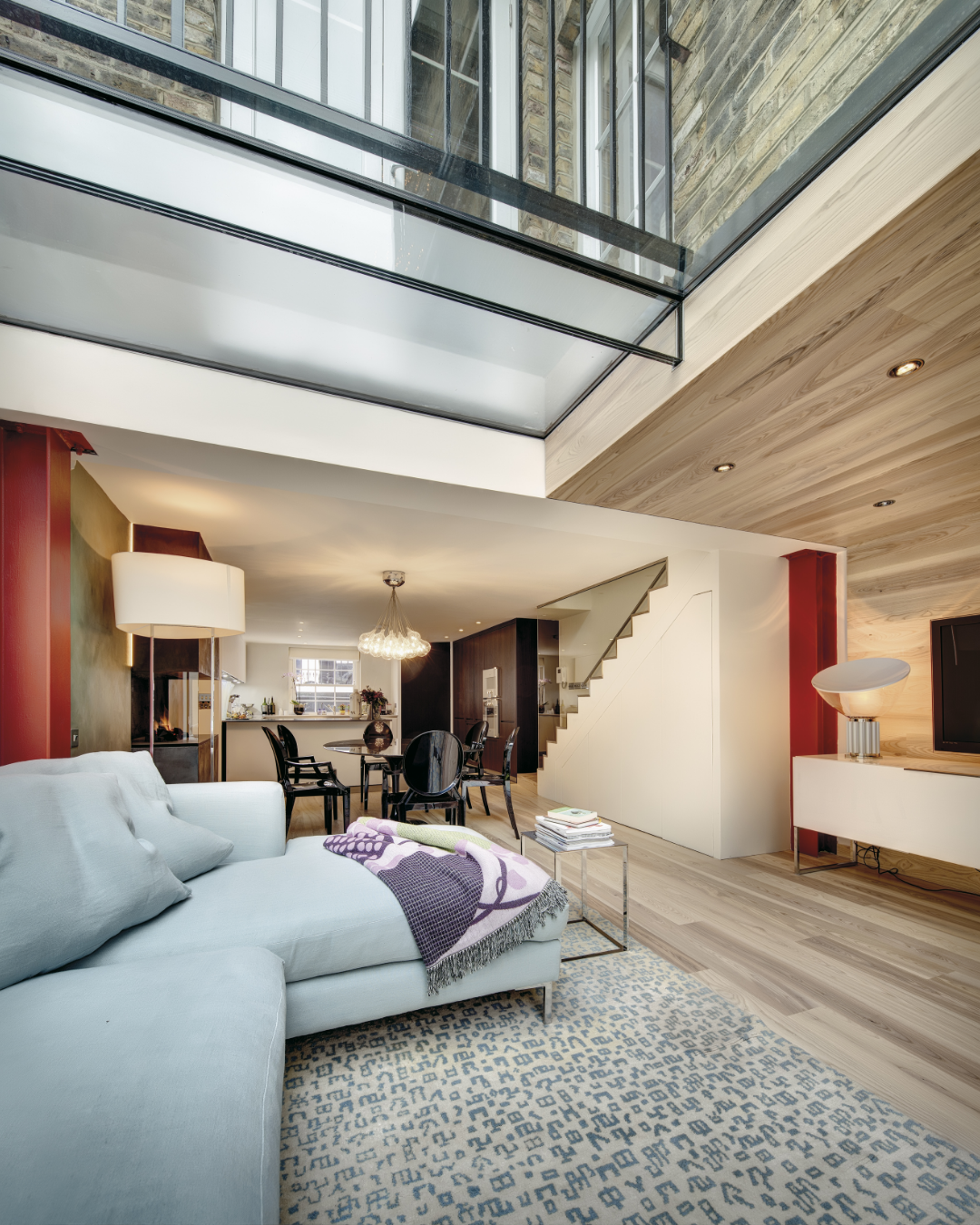
At 4MS, the first gesture was to remove barriers rather than add elements. By opening up the building and improving visual connections between levels, the interior gains a sense of flow and continuity that was previously absent.
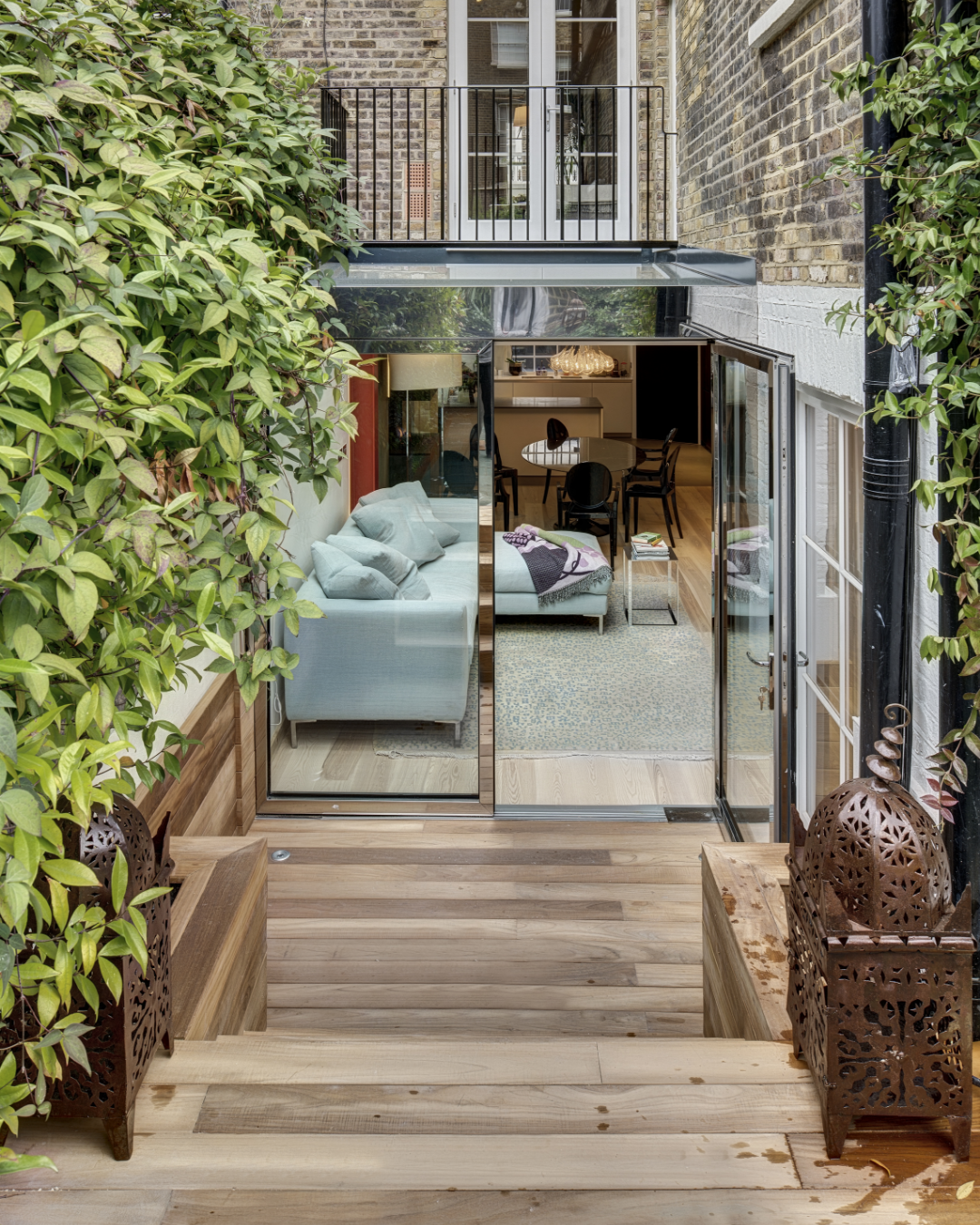
A fully glazed extension now connects the lower ground floor kitchen and dining area to the garden beyond. Light moves freely through the plan, drawing the landscape inward and dissolving the boundary between inside and out.
The stainless steel structure of the extension reflects the garden both internally and externally, subtly multiplying views and reinforcing the relationship between architecture and nature. Rather than dominating the space, the structure recedes, allowing light and reflection to take precedence.
flexibility through intelligent use of space
Adaptive interiors rely as much on what is hidden as on what is visible. At 4MS, flexibility is supported by a rigorous approach to storage and spatial efficiency.
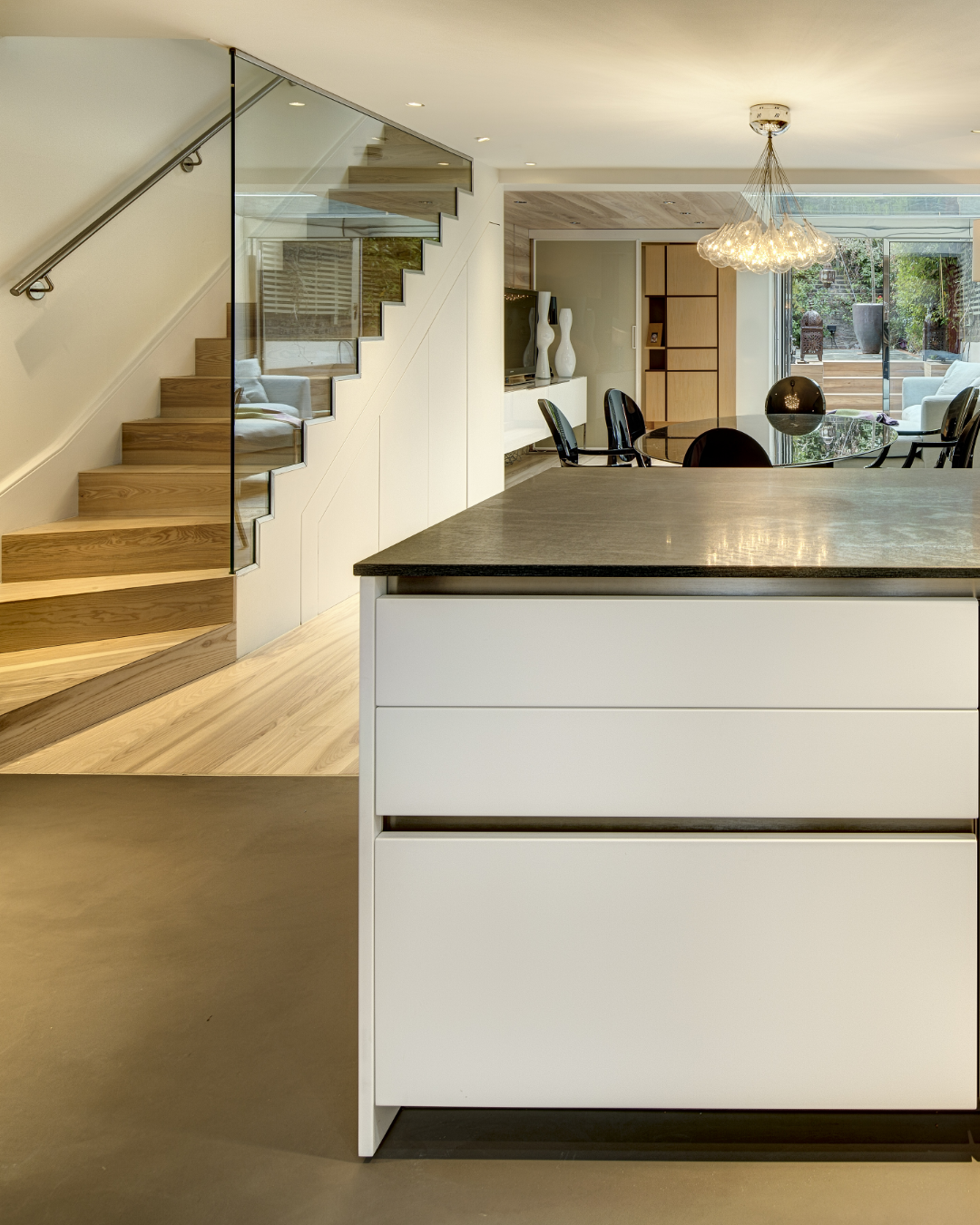
Existing wardrobes were expanded, and underutilised areas beneath staircases were transformed into integrated cupboards. These interventions allow living and sleeping spaces to remain uncluttered and calm, supporting a sense of retreat within the home.
By ensuring that every part of the footprint works purposefully, the interiors feel both generous and contained. Rooms can adapt to different uses without the need for constant reconfiguration, allowing daily life to unfold naturally.
sustainability as a quiet framework
Sustainability in adaptive interiors is most effective when it is embedded rather than expressed. At 4MS, environmental performance was improved through careful construction detailing and material choices rather than visible technologies.
Thermal bridging was reduced, insulation made from recycled materials was introduced, and underfloor heating was installed to improve comfort and energy efficiency. Concrete aggregates were reused, while FSC and PEFC certified timber was specified for internal and external surfaces.
Low energy lighting was used throughout the project, ensuring that the improved daylight performance of the home is supported by an efficient artificial lighting strategy.
These decisions work together to reduce environmental impact while enhancing the sensory quality of the interior.
light touch, lasting impact
Adaptive interiors do not announce themselves loudly. Their success lies in restraint, precision, and long-term relevance.
At 4MS, flexibility emerges from thoughtful planning, integrated storage, and an architecture that prioritises light, reflection, and material honesty. The home is not frozen in a single moment of use but is capable of evolving as needs change.
This approach reflects a broader belief at PHA: that the most sustainable interiors are those designed to endure, emotionally as well as technically.
kitchens, light, and everyday rituals
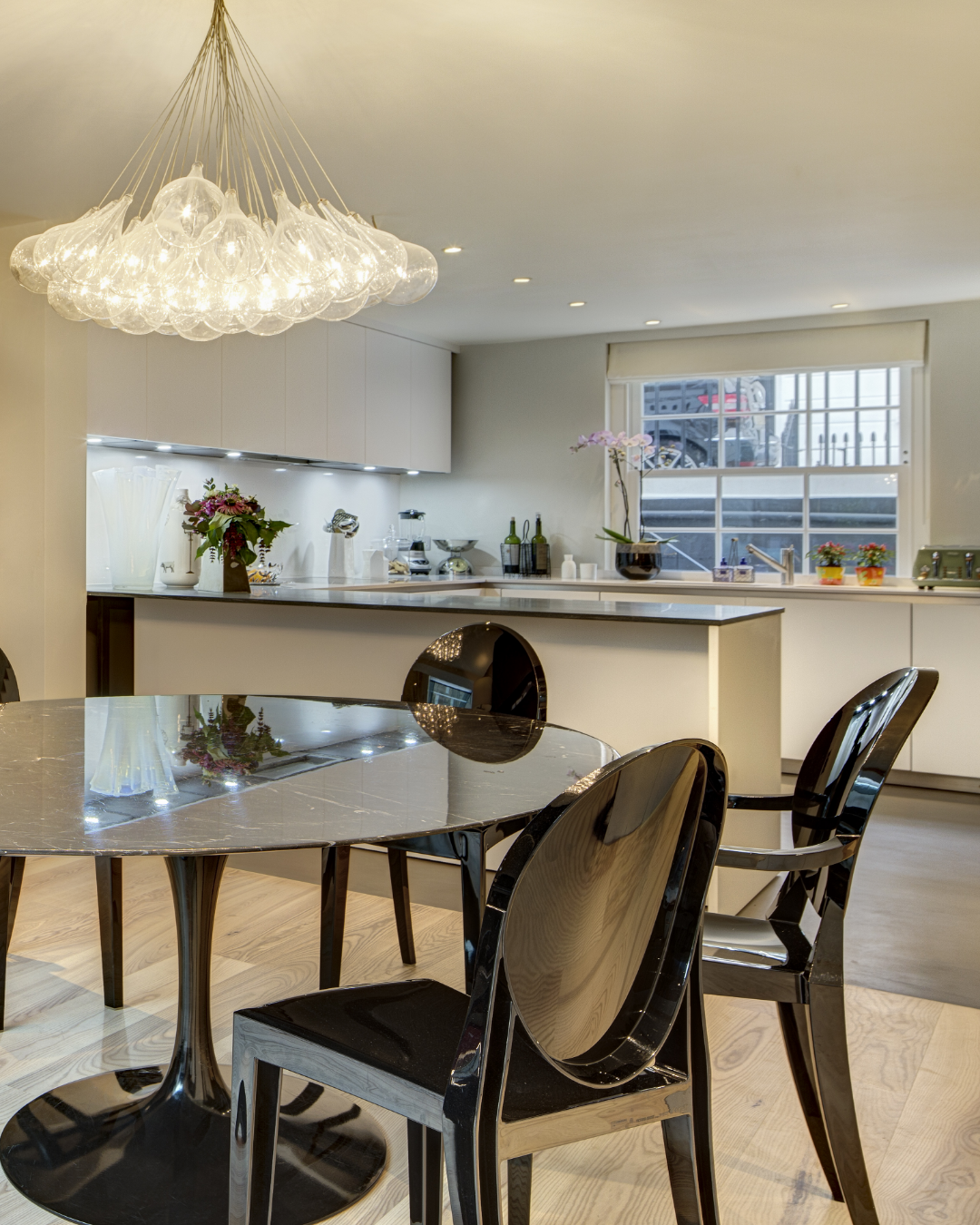
The kitchen sits at the heart of the home, both spatially and socially. At 4MS, the open-plan kitchen and dining area encourages connection while maintaining a sense of order and calm.
A Boffi kitchen anchors the space with clarity and restraint, while lighting by Viabizzuno is carefully layered to support different moments throughout the day. The result is an interior that adapts to daily rituals, from quiet mornings to shared evenings, without compromise.
reflection
Adaptive interiors are ultimately about empathy. They listen to how people live, how routines shift, and how spaces are experienced over time.
Projects like 4MS demonstrate that flexibility does not require complexity. With careful design, existing homes can be transformed into places that support modern living while remaining grounded, efficient, and quietly expressive.
Lines of Thought continues to explore how architecture and interiors can respond thoughtfully to change, creating spaces that feel alive, resilient, and deeply human.