Why We Retrofit: Sustainable Architecture Through Adaptive Reuse

rethinking older homes for modern living
Retrofitting architecture is one of the most meaningful ways to approach sustainability in cities where space, heritage and community identity are deeply intertwined. Instead of erasing buildings to start again, adaptive reuse preserves embodied carbon, extends the life of historic structures and offers an opportunity to rethink how older homes can support contemporary living.
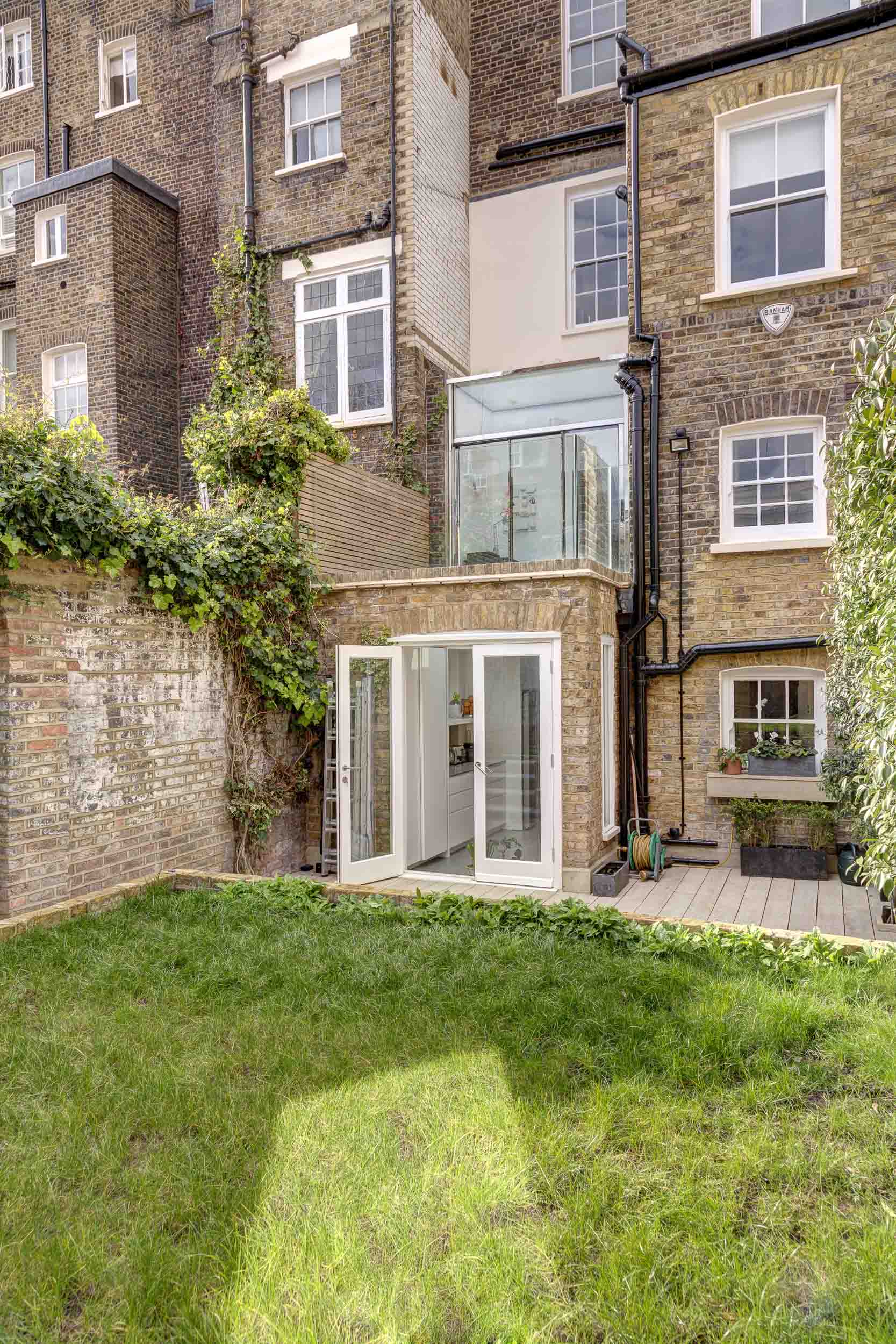
At 102BG, a Grade II listed terrace house in Belgravia, this approach guided every decision. The project sought to transform a traditional London townhouse into a brighter, more flexible family home without compromising the integrity of the original structure. The result is an example of sustainable architecture that treats history as a partner rather than an obstacle.

preserving character while introducing light
The intervention at 102BG centred on a lightweight glass and stainless steel extension that gently attaches to the rear of the listed building. Its design was intentional. During the day, the glazed volume reflects the surrounding garden and brickwork, allowing it to recede visually into its context. In the evening, the extension becomes a quiet lantern, illuminating the original façade while the structure itself appears to dissolve into the dark.
This duality is a hallmark of sensitive retrofitting for sustainable architecture.
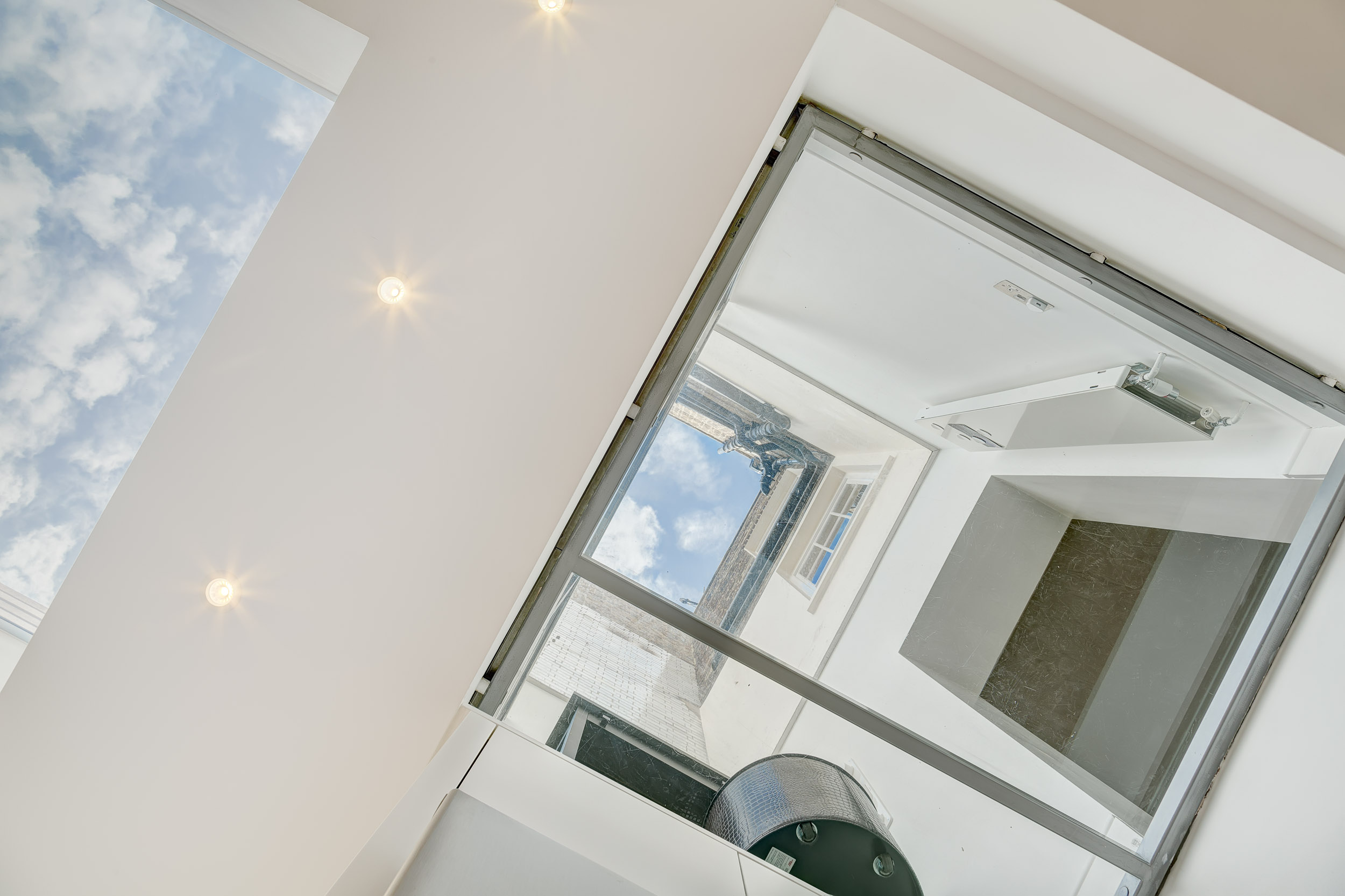
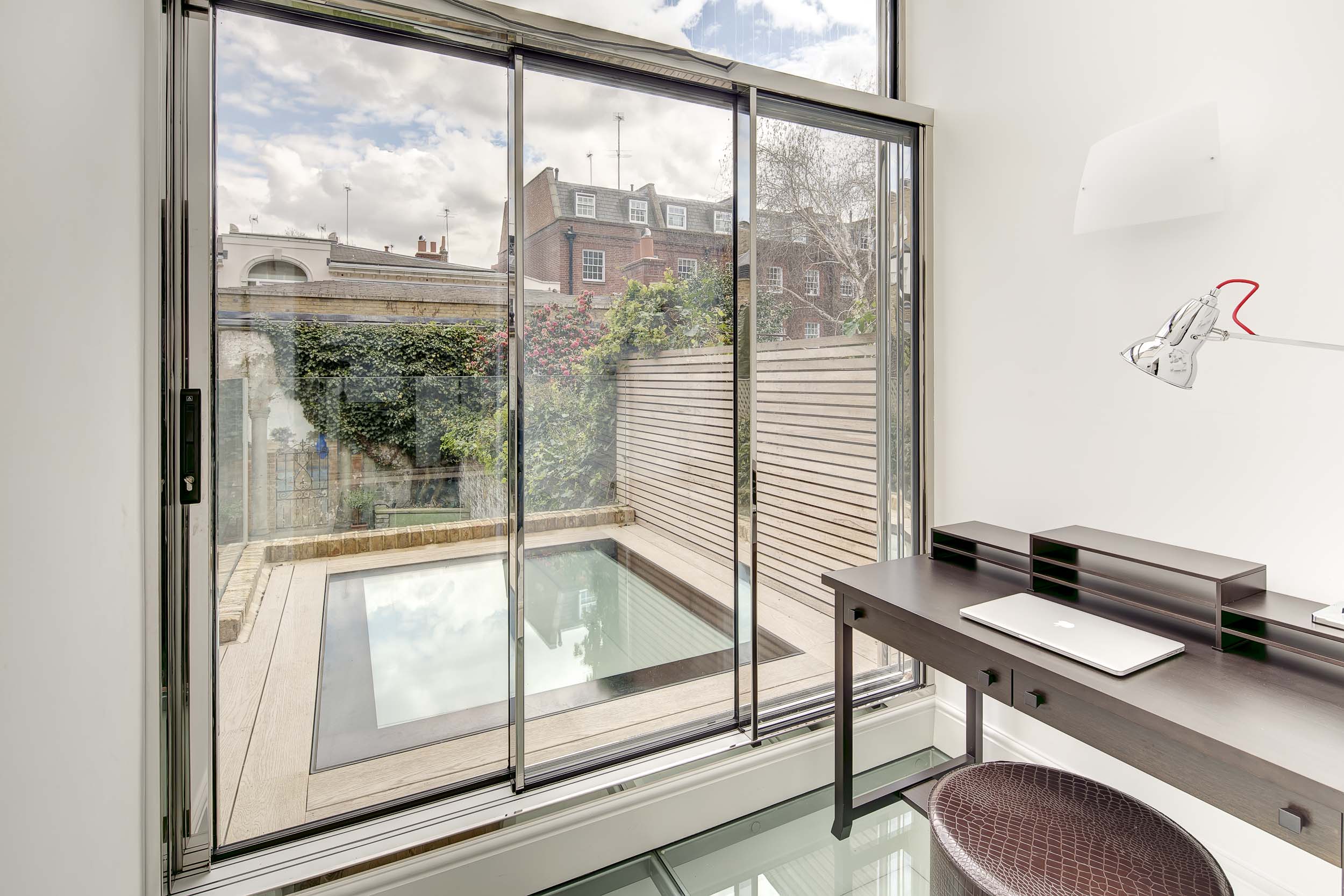
Two walk-on skylights were integrated to bring natural light deep into the home, transforming previously dim areas and enhancing energy-efficient design by reducing the need for artificial lighting throughout the day. Both the extension design and skylights are documented in the project overview and elevations, which show the stainless steel frame and flat-glazed roof interacting lightly with the existing façade.

adaptive reuse as a sustainable strategy

Retrofitting is inherently a low-carbon renovation strategy. By working with the existing structure rather than replacing it, the project retains the majority of its embodied energy and avoids the environmental cost of demolition and new construction.

At 102BG, the contemporary elements draw from a palette that elevates the building without competing with its listed status. Stainless steel framing, elondo timber decking, and polished concrete floors appear throughout the proposed plans and palette boards, providing durable materials that support longevity and reduce maintenance cycles. These choices extend the lifespan of the home while significantly reducing its environmental footprint.

Adaptive reuse also challenges the expectation that efficiency requires technological complexity. At 102BG, the simplest strategies proved most effective. Increased natural light, functional outdoor spaces, improved circulation and high quality materials all contribute to a more energy-efficient design for sustainable architecture.
light touch, strong impact

The success of adaptive reuse lies in its restraint. The extension at 102BG is a study in how minimal intervention can achieve maximal change. The design diagrams and sections illustrate how the new glazed volume aligns carefully with existing openings, ensuring proportional clarity and architectural continuity across the rear elevation of the house .
The extension interacts with the historic building gently, offering added space and daylight without compromising the character of the original masonry. This lightness transforms the home while allowing the past to remain visibly and structurally present.

designing for modern family life

Retrofitting architecture is ultimately about preparing existing homes for how people live today. At 102BG, the refurbishment of the ground and basement floors restructures the home around cleaner sightlines, brighter materials and greater spatial fluidity.
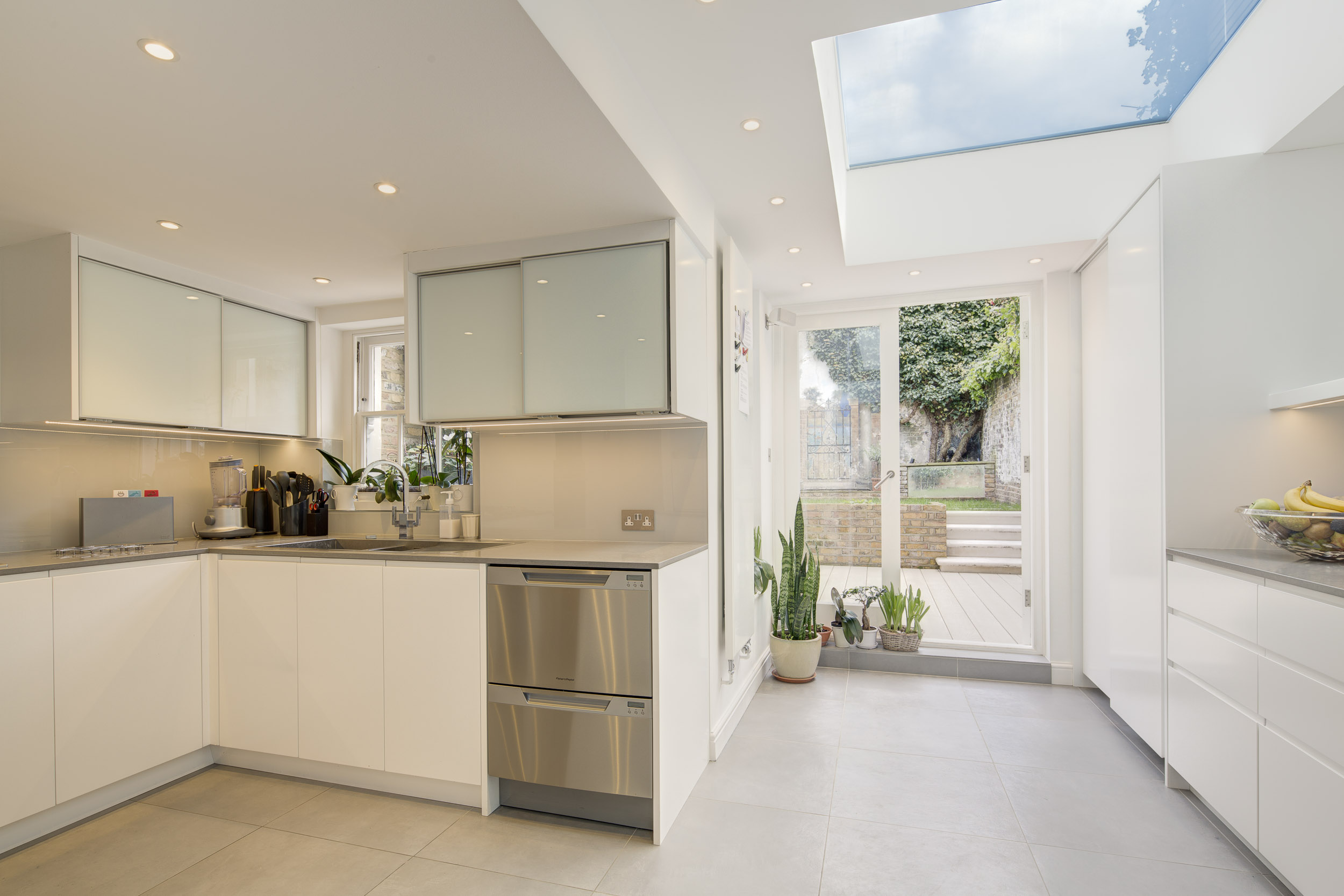
The kitchen, which sits directly beneath one of the walk-on skylights, is designed as a functional and welcoming space with white matte finishes, stone worktops and integrated storage. Its position links the interior to the garden, emphasising openness and everyday usability.
The external landscaping was also reconsidered. The garden was simplified and tailored to the family’s needs, retaining only the trees and plantings that supported the sense of openness. Large indigenous ferns were removed and donated to Belgrave Square, an act that both improved the garden layout and contributed positively to public planting initiatives. This change revealed a hidden classical fresco that had been obscured for decades, reintroducing a historic feature into the daily life of the home.

reflection

Retrofitting architecture is not an act of compromise. It is an act of precision and respect. At 102BG, the project demonstrates how sustainable architecture can be achieved through thoughtful intervention, energy-efficient design and a commitment to adaptive reuse.
The home now reflects a balance between past and present, where contemporary materials support historic fabric and natural light reshapes the interior experience. By choosing to retrofit rather than rebuild, the project shows what is possible when sustainability and heritage coexist. It is a reminder that the future of architecture often begins with the buildings we already have, and with the responsibility to help them live well for generations to come.
Contact US
This site uses cookies to offer you a better browsing experience. By browsing this website, you agree to our use of cookies.